New set of paintings in a rickety gif:

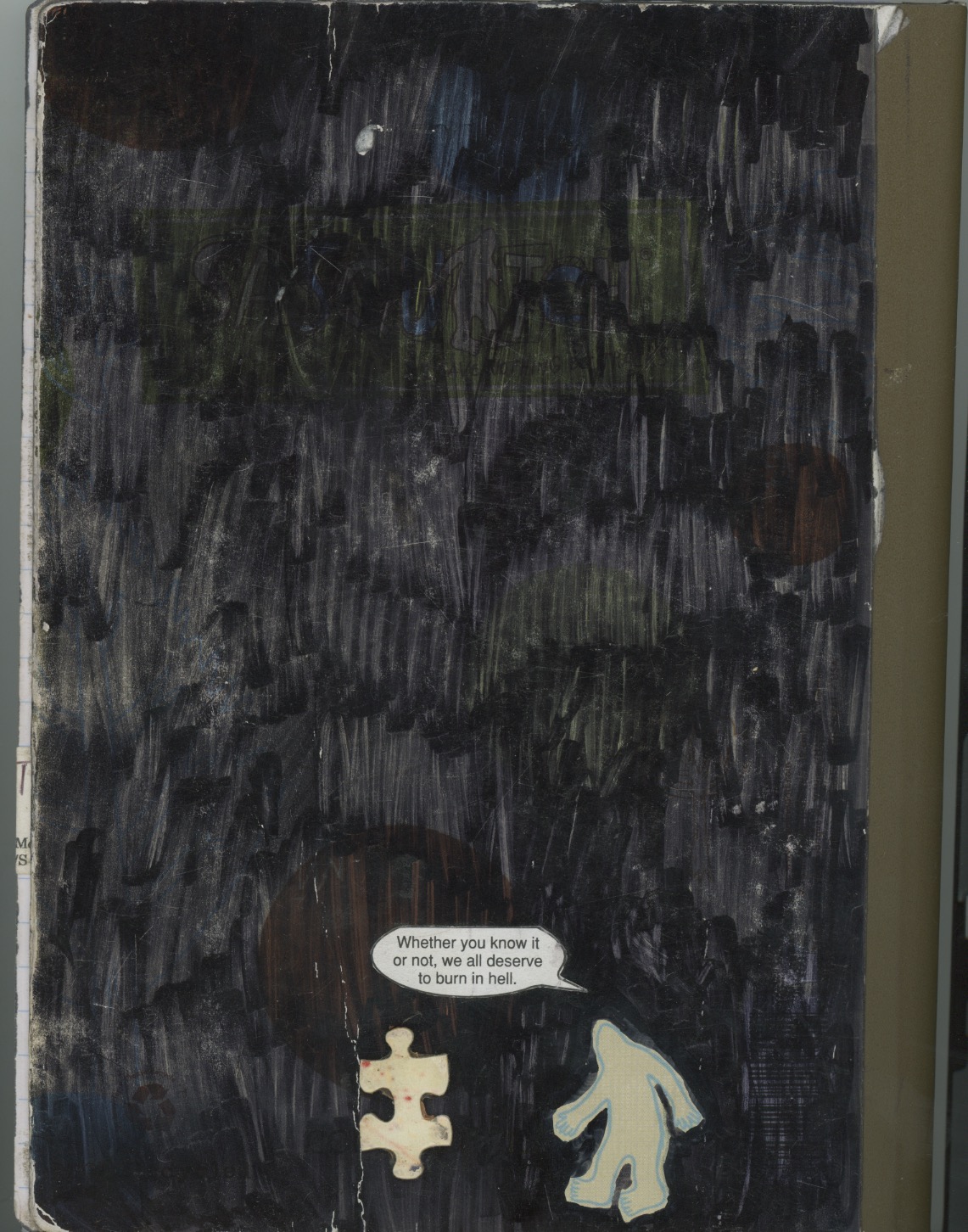
Have You Seen Me? (Flowerman) # 1 - 10, 2021, rubberized aerosol paint and india ink on paper, 24 X 18 ins.
New set of paintings in a rickety gif:
Have You Seen Me? (Flowerman) # 1 - 10, 2021, rubberized aerosol paint and india ink on paper, 24 X 18 ins.
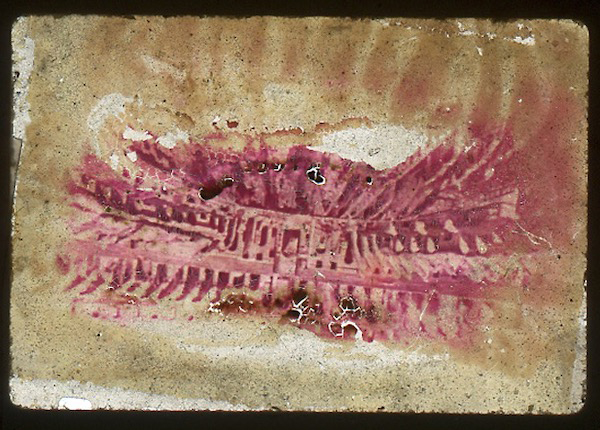


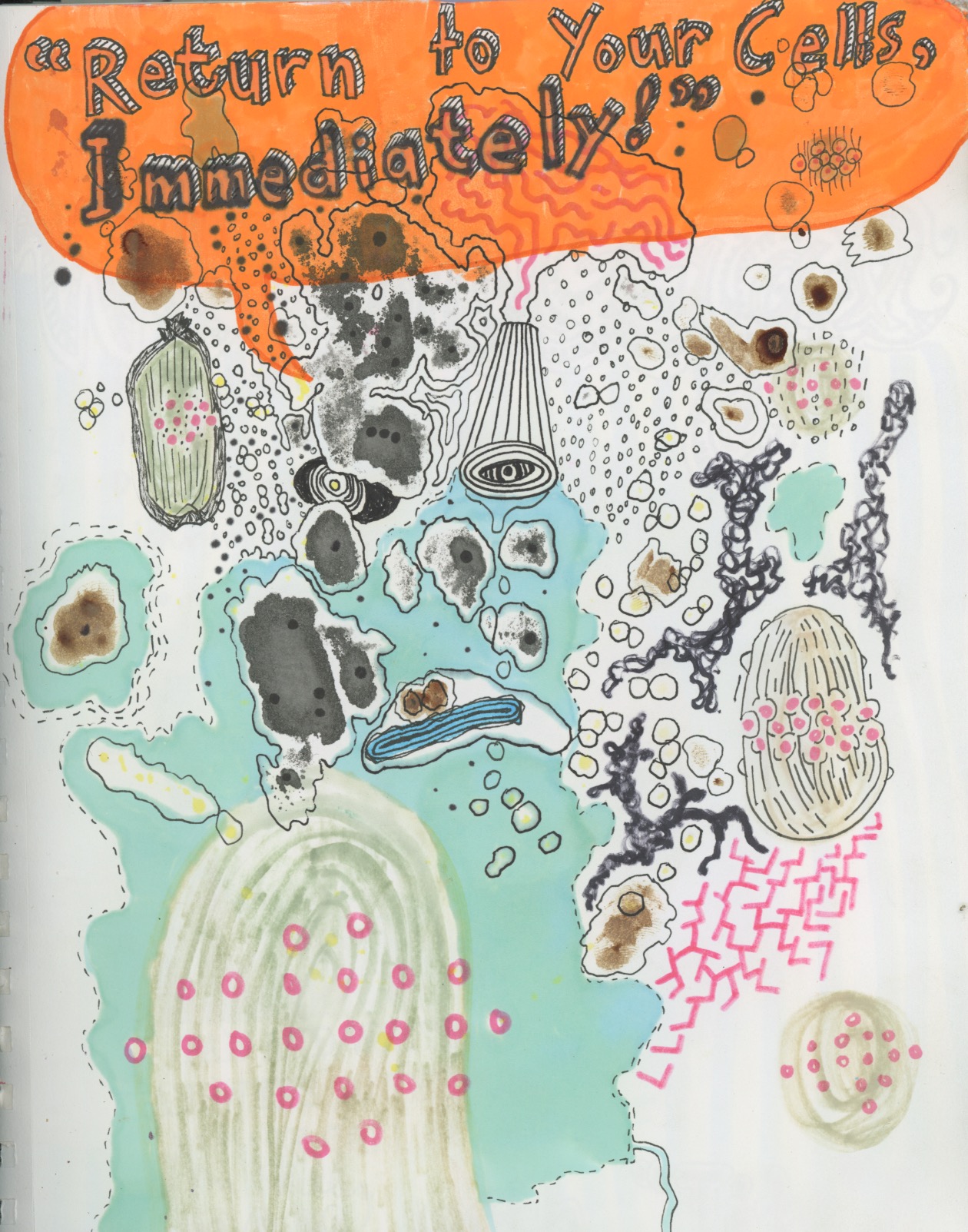
Enamel on paper with watchworks. I think there were about a dozen of these, give or take. I found a box of old dead watches on the street. Not really old, and not all dead. But old enough to have moving metal parts. Each ectoplasm contained all the bits from a single watch that I could take apart with a tiny screwdriver and exacto knife.


I've been locked out of Facebook for 24 hours because I've offended the algorithm again (the first time was when I posted a topless image of Sacheen Littlefeather)!


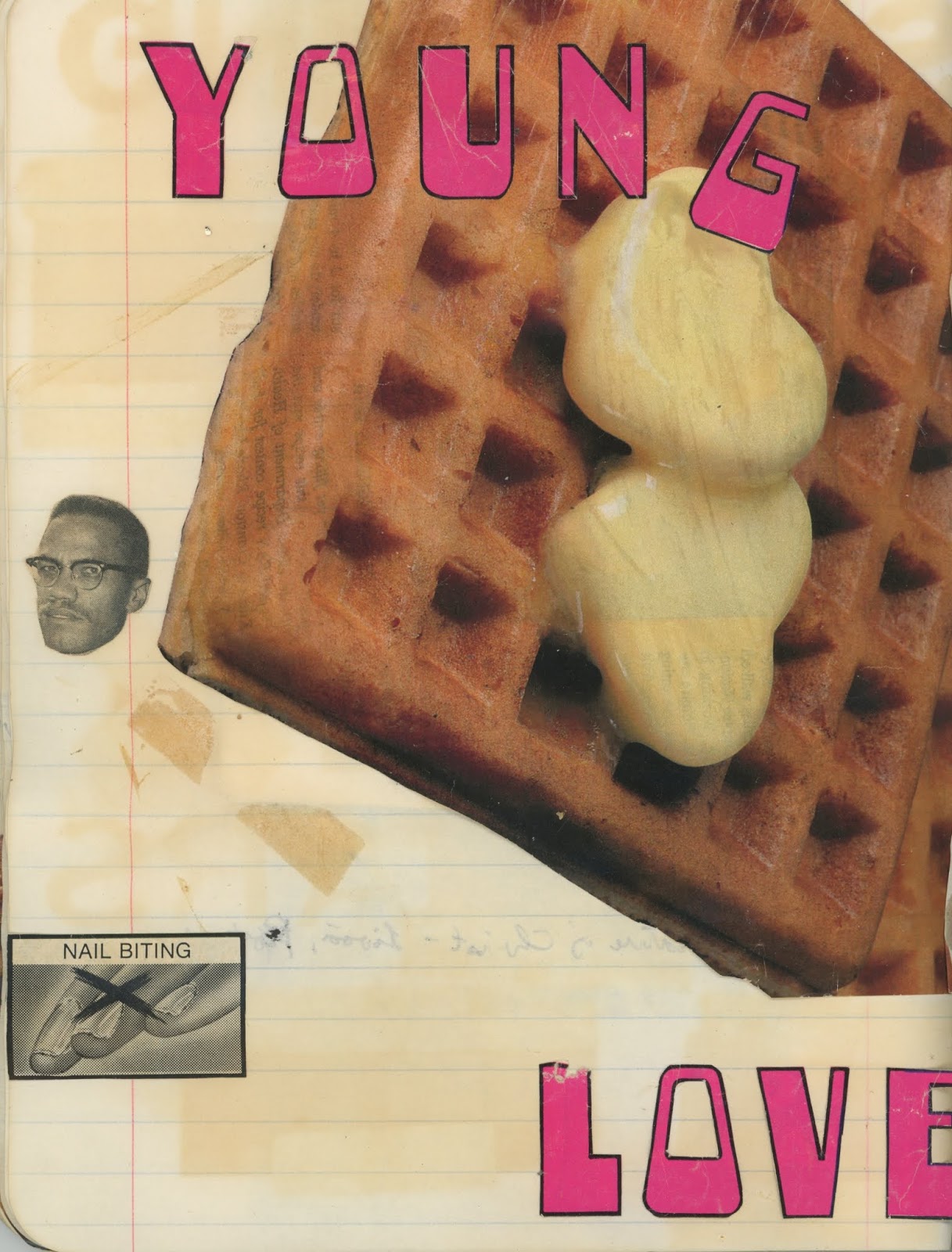
Ink on paper, sketchbook page, 11 X 9 ins (documenting the first meeting of Daniel Hawkins and Veronica Lajambe, when V was convinced he'd snuck some crack into the herbal cigarette we were sharing)


After a few minutes of silence the Philosopher began to speak.
“I do not see any necessity in nature for policemen,” said he, “nor do I understand how the custom first originated. Dogs and cats do not employ these extraordinary mercenaries, and yet their polity is progressive and orderly. Crows are a gregarious race with settled habitations and an organized commonwealth. They usually congregate in a ruined tower or on the top of a church, and their civilization is based on mutual aid and tolerance for each other’s idiosyncrasies.
Their exceeding mobility and hardiness render them dangerous to attack, and thus they are free to devote themselves to the development of their domestic laws and customs. If policemen were necessary to a civilization crows would certainly have evolved them, but I triumphantly insist that they have not got any policemen in their republic —”
“I don’t understand a word you are saying,” said the sergeant.
“It doesn’t matter,” said the Philosopher. “Ants and bees also live in specialized communities and have an extreme complexity both of function and occupation. Their experience in governmental matters is enormous, and yet they have never discovered that a police force is at all essential to their well-being —”
“Do you know,” said the sergeant, “ that whatever you say now will be used in evidence against you later on?”
“I do not,” said the Philosopher. “It may be said that these races are free from crime, that such vices as they have are organized and communal instead of individual and anarchistic, and that, consequently, there is no necessity for policecraft, but I cannot believe that these large aggregations of people could have attained their present high culture without an interval of both national and individual dishonesty —”
“Tell me now, as you are talking,” said the sergeant, “did you buy the poison at a chemist’s shop, or did you smother the pair of them with a pillow?”
“I did not,” said the Philosopher. “If crime is a condition precedent to the evolution of policemen then I will submit that jackdaws are a very thievish clan — they are somewhat larger than a blackbird, and will steal wool off a sheep’s back to line their nests with; they have, furthermore, been known to abstract one shilling in copper and secrete this booty so ingeniously that it has never since been recovered —”
“I had a jackdaw myself,” said one of the men. “I got it from a woman that came to the door with a basket for fourpence. My mother stood on its back one day and she getting out of bed. I split its tongue with a threepenny bit the way it would talk, but devil the word it ever said for me. It used to hop around letting on it had a lame leg, and then it would steal your socks.”
“Shut up,” roared the sergeant.
“If,” said the Philosopher, “these people steal both from sheep and from men, if their peculations range from wool to money, I do not see how they can avoid stealing from each other, and, consequently, if anywhere, it is amongst jackdaws one should look for the growth of a police force, but there is no such force in existence. The real reason is that they are a witty and thoughtful race who look temperately on what is known as crime and evil — one eats, one steals; it is all in the order of things and, therefore, not to be quarreled with. There is no other view possible to a philosophical people —”
“What the devil is he talking about?” said the sergeant.
“Monkeys are gregarious and thievish and semi-human. They inhabit the equatorial latitudes and eat nuts —”
“Do you know what he is saying, Shawn?”
“I do not,” said Shawn.
“— they ought to have evolved professional thief-takers, but it is common knowledge that they have not done so. Fishes, squirrels, rats, beavers, and bison have also abstained from this singular growth— therefore, when I insist that I see no necessity for policemen and object to their presence, I base that objection on logic and facts, and not on any immediate petty prejudice.”
“ Shawn,” said the sergeant, “have you got a good grip on that man?”
“I have,” said Shawn.
“Well, if he talks any more hit him with your baton.”


"Noah Purifoy is a short, muscular African-American man then in his sixties with gnarly hands, a pugnacious thrust to his posture, and a deliberate and somewhat querulous voice. A Los Angeles sculptor of found art, he is a deep thinker about creativity and culture. According to Noah, all artists work in fundamentally the same manner, no matter what their medium is. Following a hunch, an impulse, ora hypothesis, they make a move, a line, a sentence. They step back and regard what they have done, then they act again and review again, discovering where they are going incrementally. This antipodal shifting between the realms of logic and intuition is the core of the creative process. It is, according to Noah, a problem-solving mechanism of the highest order because it utilizes and integrates both the right and left hemispheres of the brain.
Noah’s “hunch” was that the council itself should operate according to the same creative process, using as its starting position the policy and program intuitions of the members. Since most of us were working artists, we were comfortable leaping into the unknown in this manner. Purifoy asserted further that just as the creative process was a problem-solving mechanism for the artist, the community of artists could serve as a reservoir of creative problem solvers for the state. Artists could even save the state money if they succeeded in cracking some of the obdurate problems plaguing it.
When the council began to design programs, we used Noah's ideas as our template and discovered how readily they expedited our ideas of service. If we want to have art in the state, we reasoned, we should create opportunities for artists to serve the state’s needs. If we paid a subsistence wage for twenty hours of weekly work, the artists would create art on their own nickel in the remaining time. There was no need to pay them for making art, and doing so has been one of the major controversies and political problems of arts funding. Even the densest legislator could understand the equation of payment for service.
It was fascinating to track the reactions as the council began to explore and articulate this idea. A contrary philosophy known as art-for-art’s-sake was articulated among the representatives of the state’s “High Art” institutions. They argued that art had no statement to make nor any practical significance (which I always considered a dangerous argument to advance when asking taxpayers for their money). They contended that to attach a work of art to any purpose outside of its own organic evolution was to debase the work, andI can certainly agree with the latter part of the statement.
But such arguments could not (or would not) address that all choices — especially by a government agency—are inherently political and reflect the interests or worldview of one group or another, Art-for-art’s-sake is the philosophy about art of a group accustomed to dominance, which mistakes its political power for revealed truth, They did not accept that their worldview was only one among many, some of which were far older and at least as well developed."