Thursday, November 29, 2012
In Advance of the Mayan Apocalypse
My first Echo Park Film Center curatorial project since UNCANNY MY ASS! is a launch event Sunday December 16th at 8 PM for the 'pITA3 book, with TRIBULATION 99, The Legion of Rock Stars, John Kilduff, and much more!
"Join Doug Harvey and collaborators for a launch event celebrating ‘patacritical Interrogations Techniques Anthology Volume 3, forthcoming from AC Institute, exploring the nexus between faulty translation, conspiracy theory, and the avant garde.
The combination cabaret/symposium is centered around a screening (in advance of the Mayan calendar end date) of Craig Baldwin’s legendary TRIBULATION 99: Alien Anomalies Under America, the unsurpassed 1991 collage documentary that ties together virtually every conspiracy theory.
The evening will be fleshed out with relevant short films and presentations from ‘pITA3 contributors, as well as a performance by John “Let’s Paint TV” Kilduff, a selection of detourneed music videos from The Legion of Rock Stars, and much more!
A handful of very special advance copies of the anthology will be available for the first time anywhere, and as always, refreshments and door prizes will abound!"
More details as they emerge...
Tuesday, November 27, 2012
Tuesday, November 20, 2012
The Wait is Over!
Just received 20 advance copies of 'patacritical Interrogation Techniques Anthology Vol 3, so we're primed for some kind of L.A. book launch event before the world ends on Dec 21st! Stay tuned...
Sunday, November 18, 2012
Ancient Signs
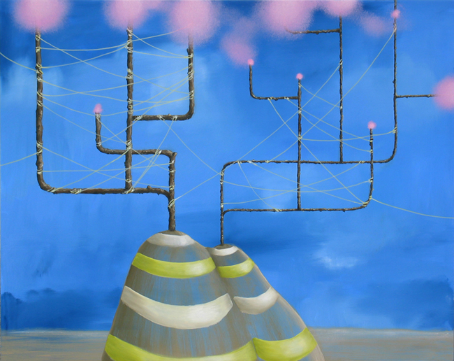
An interesting coda of mixed nostalgia and industrial design to Rebecca Ripple's exhibit at Gallery KM, photographed with available light on Santa Monica Boulevard the night of her opening. PS: Does that last one remind you of any masterpieces of modern art?
Blood Alley Disco
Lee Lynch in the Audi Sky lounge at the Roosevelt Hotel for the afterparty of the US premiere of Mike Ott's Pearblossom Hwy. My review won't be out until January, but if they need a pull quote before then, I do call Cory "the new Jean-Pierre Léaud"! (below)
Friday, November 16, 2012
A Golden Shower of Art Historical Trivia
The first few free pdf downloads of The LOOP Shows catalog accidentally left out the footnotes of my essay. It's been fixed now, but I wanted to put this up in case anyone missed it - it was a sort of aside to my musings on Duchamp's Fountain. Also wanted to draw attention to Hunter's excellent book, which I actually found time to finish - so you know it must be good!
"1. I’m not sure how this fits in, but as I was writing this, I read this anecdote in Hunter Drohojowska-Philp’s Rebels in Paradise: The Los Angeles Art Scene and the 1960s:
When dealer Julien Levy rented a gallery on Sunset Boulevard in 1941 to exhibit Duchamp's The Bride Stripped Bare by Her Bachelors, Even, along with pieces by Salvador Dalí and others, the actor John Barrymore got so drunk at the opening, he unzipped his pants and unceremoniously urinated on a work by Surrealist Max Ernst.Apart from being surprised to learn that The Large Glass has actually made it to tinseltown, I was struck by the strange urinal loop generated by this incident in combination with the more famous case of Jackson Pollock relieving himself in the fireplace of Peggy Guggenheim (AKA Mrs. Max Ernst!) in 1944, during a party to celebrate the installation of a commissioned mural by Pollock. This has been interpreted by some as a gesture of retaliation because the oversized canvas had had 8 inches trimmed off one end in order to make it fit the allotted space… at the suggestion of Marcel Duchamp."
Click here to download the full-color catalog for both the China Adams-curated LOOP Shows!
PS: The only other footnote was citing this article I wrote about China's own artwork.
Tuesday, November 13, 2012
Hawk & Shaw
It’s been a crazy year for Jim Shaw. In January, having drastically downsized his legendary atelier community in the wake of the economic crash, he moved out of the studio that had produced some of Los Angeles’s most ambitious and monumental artworks of the past decade. He took the opportunity to deaccession much of his equally legendary hoard of pop-cultural ephemera — we’re talking tons of pocketbooks, vinyl LPs, vintage magazines, religious pamphlets, board games, collectible figurines, and so on — much of which had served as source material for his feverish postmodern appropriations. Two days later, the body of his longtime art comrade (and collaborator in the seminal noise band Destroy All Monsters), Mike Kelley, was discovered, an apparent suicide that the L.A. art world has not yet fully digested. So much for clearing the decks.
Named an executor of Kelley’s estate, and the only artist on the board of the Mike Kelley Foundation for the Arts, Shaw found himself enmeshed in the minutiae of his good friend’s legacy when he was supposed to be not only producing new work for solo exhibitions at Metro Pictures, Simon Lee, and his new L.A. dealer, Blum & Poe, but also sorting out the particulars for a large-scale midcareer survey that opens November 9 and runs through February 17 at the Baltic Centre for Contemporary Art, in Gateshead, England, where last year’s Turner Prize exhibition was held. I caught up with Shaw in the midst of his hectic schedule at his new, streamlined work space, sandwiched between a liquor store and a beauty salon in a strip mall in Altadena, a few minutes northeast of downtown L.A., and asked him how Kelley’s death had affected him. He declined to go into detail about his legal responsibilities but was forthcoming about the personal impact.
“One thing it’s done is make me realize that for a lot of my life as an artist, I’ve looked at the people that came before me and thought they were really good, but they made this mistake, and I don’t want to make it,” he says, glancing up from daubing paint on one of his signature torn-photorealist portraits. “Of course, I made other mistakes, but — looking at Mike and what he achieved…he achieved a lot, but he paid a huge price for it, and I don’t want to pay that price. I don’t want to continue to kill myself to make this art and let the rest of my life go down the tubes."
“It’s made me less materialistic, too, looking at Mike’s library, his fabulous library, then looking at my fabulous collection of crap. I was already getting rid of it at the time because I had to move out of that studio. But now I’m even more like — if I read a book, I’m not going to keep it forever; I’m going to recirculate it. I’ll just keep the ones that have reference material that I need to keep going back to. That’s why I don’t want to get caught up in making the prog-rock opera if it means going into debt. I’ll keep it as an ideal, but it may never get completed.”
Yes, you read that right: Prog. Rock. Opera. The crowning Gesamtkunstwerk in Shaw’s long-term project exploring the mythological, historical, and cultural manifestations of a fictive 19th-century new American religion called Oism, the long-rumored multimedia extravaganza was gearing up to full production mode in 2008 when the Wall Street apocalypse struck. The originally envisioned debut of the work at the CAPC in Bordeaux morphed into the acclaimed “Left Behind” exhibition there, dominated by Shaw’s ridiculously complex allegorical paintings on gigantic found theatrical backdrops, predicated, at least in part, on an inspired associative leap equating the fundamentalist Christian rapture with the plight of the American working class — a curiously topical leitmotif that seemed to have been lurking in the material all along...
Read the rest of Mad World: Jim Shaw’s Wondrous and Difficult Year at the ArtInfo site or in the November print issue of Modern Painters
Jim Shaw: The Rinse Cycle & You Think You Own Your Stuff
But Your Stuff Owns You (Thrift Store Paintings)
9 November 2012 - 17 February 2013
Baltic Centre For Contemporary Art
Gateshead Quays, South Shore Road
Gateshead NE8 3BA, UK
I would also like to draw your attention to this article in the NYTimes about the insane treehouse Tim Hawkinson built for his daughter Clare, which was an piece I wanted to write, but Carol Kino beat me to the punch...
Images: Jim Shaw; Mall Culture (from Strange Früt: Rock Apocrypha designed by Shaw & Mike Kelley for DAM); Shaw in
his new L.A. studio; The Rinse Cycle
2011, acrylic on muslin; Untitled
2008; Capitol Viscera Appliances
2011, acrylic on muslin.
Shaw portrait photos by Kevin Scanlon; Clare’s treehouse
photo by Tierney Gearon
Thursday, November 8, 2012
Peers Disappears Saturday!
This Saturday, November 10, is the last day to see M.A. Peers's spectacular new show at Rosamund Felsen Gallery, 2525
Michigan Ave., Bergamot Station, Santa Monica. www.rosamundfelsen.com
"For the last 500 to 600 years, art and individuality have got on well with each other. The former has fanned the flames of the latter and the latter has expanded the parameters of the former, at least since the Enlightenment. At Rosamund Felsen Gallery, M.A. Peers throws a monkey wrench into these developments.
That accounts for the delicate drawings of life-size show dogs in the first gallery, the disquieting portraits of an anonymous man in the second gallery, and the ghostly abstractions in the third — which appear to have been made by like-minded collaborators or a lone artist who doesn’t trust her first impulses and is even more suspicious of what happens with second looks, second thoughts, second guesses..."
Rosamund Felsen Gallery is
pleased to present the fifth solo show of paintings and works on paper by M.A.
Peers. Peers’ new exhibition pursues the binary avenues that characterized her
recent Project Series exhibition at Pomona College Museum of Art: firstly, a
new series of large-scale borderline abstractions that bring to bear an
increasingly virtuosic formalist painting vocabulary on progressively atomized
and indeterminate subjects.
Deriving in part from her
earlier series depicting generic male yuppies dissolving in haloes of prismatic
color, Peers’ new work (including one piece appropriately entitled ,
Disintegrating Yuppie) pushes the intensity of her luminous abstraction to the
point where only fragmentary ghosts of her figurative and landscape elements
remain.
This body of work is paired
with Peers’ taxonomic examinations of the exacting aesthetic criteria used to
differentiate and evaluate purebred dogs. These latter take the form of
larger-than-life oil paintings on paper depicting current top-ranked whippets
in the American Kennel Club conformation standings, seen from the side, in the
standard show-ring pose.
Drawing on inspirations as
diverse as George Stubbs, Bernd and Hilla Becher, Marcel Duchamp, Thomas
Kincade, and Sigmar Polke, Peers’ simultaneous investigation of minute
objective specificity and amorphous aesthetic disembodiment conjure a
psychedelic nausea of disturbing beauty and complex emotional import.
M.A. Peers is a Los
Angeles-based painter whose work has been exhibited internationally since her
emergence from UCLA grad school in 1994. She is ironically most recognized for
her initially anonymous portraits, Dogs of the Soviet Space Program,
commissioned by the Museum of Jurassic Technology, though her more personal
work has garnered considerable acclaim from critics and fellow artists. Her
well-loved dog works are rooted in a lifelong engagement with the world of
human/canine collaboration, including her ongoing involvement as an owner/handler
in the conformation ring, as well as breeding, Agility, Competition Obedience,
Coursing, and the newly emerging sport of Canine Nose Work.
Images: Cattle Dog (mixed) 2012; Whippet Show Pose II 2010; Taken II 2012; Quatres Freres 2012; Untitled (white swath) 2012; Disintegrating Yuppie 2012; Yuppie IV 2011; Disintegrating FM 2012; Chloe’s Eye 2012; Untitled (figure 8) 2010-11. Photos by Grant Mudford.
Friday, November 2, 2012
Some Funds
Here are my endorsements for the current crop of direct fundraising campaigns that have recently crossed my desk. There's something seriously fucked up with blogger right now so I'll just post this without captions and get the hell out of here. Dig deep!
Offramp Gallery is holding a benefit auction Nov 3 & 4 to pay for LA painter Lisa Adams' medical bills following complications to her cataract surgery. Contributing artists include Laddie John Dill, Ed Moses, Kristin Calabrese, Larry Bell, Chuck Arnoldi, Iva Gueorguieva, Anita Bunn, Susan Sironi, Jim Ganser, China Adams, Joshua Aster, Erin Cosgrove and many more. Lisa's formally exquisite and conceptually idiosyncratic nature paintings just keep getting better, so let's keep 'em coming!
Here's a Kickstarter ending Monday Nov 5th, headed by the great text-sound composer Charles Amirkhanian and his Bay Area Other Minds organization, funding a three-day music festival honoring the life and work of the late brilliant avant-garde piano-roll composer Conlon Nancarrow (above in his Mexico City studio; click very top image to see video of one of his rolls in action). Performances, panels, exhibitions, films & more!
Duplex Planet mastermind David Greenberger needs help funding a new CD collaboration with Robyn Hitchcock, and was recently offering a thankyou in the liner notes and a copy of the CD to anyone who bought $250 worth of his highly affordable and surprisingly awesome visual art from his facebook albums, some of which dates back to the 60s. You might want to email him to see if the shout-out offer still holds, but the art's a terrific bargain in any case, and easy to kill a couple of hours perusing.
Some of our friends at the ECF Art Program for the developmentally different are raising money on indiegogo to publish a 400-page "museum quality" book of these neurologically amazing and subversively accomplished artists' output. Only $29,850 to go on their goal of $30K! Cmon, people! (They're also looking for a Program Supervisor with an MFA and bureaucratic chops, BTW)
Also through the end of the month, beloved agit-pranksters The Yes Men are raising funds on Kickstarter to complete their third feature-length interventionist documentary, The Yes Men Are Revolting. This is the official secret decoder ring (!) you get for donations of $35 or more!
Monday, October 22, 2012
Cage Match 2
It's still the 100th anniversary year of John Cage's birth, so I thought I'd perpetuate my Johnny-come-lately bandwagonesque celebration with my first ever mash-up, of Joey Ramone and Robert Wyatt - iconic figures of the punk and psychedelic eras, respectively - performing JC's The Wonderful Widow of Eighteen Springs - his song from 1942 based on a passage from James Joyce's Finnegans Wake.
Here We Go Loopty Loo
"Ever since Picasso or Braque first incorporated a fragment of commercially fabricated illusionistic woodgrain wallpaper or chair caning oilcloth into the first works of Synthetic Cubism, Art has been feeding off the corpse of its industrial mass media doppelgänger. In an abrupt inversion of the alchemical mechanism underlying the entire preceding history of art, the sudden superabundance of pictorial or otherwise symbolically fashioned artifacts became the base material out of which artistic gold was fashioned.
The significance of this breach and subsequent fallout cannot be overemphasized, yet it has been strangely marginalized in most conventional accounts of Modernist and so-called Postmodern art history. Within only a few years, the reversal of the relationship of the commercially designed world and the privileged cultural position of the high artifact had reached an early apotheosis in Duchamp’s Fountain; an inverted hardware-store urinal, signed with a pseudonym taken from the funny pages, and immortalized in a small circulation but mass-media modeled zine.
In 2004, a survey of 500 British art world professionals sponsored by Gordon’s Gin named Fountain the most influential artwork of the XXth century (“You don’t buy influence, you just rent it”), yet most of the evaluations of its impact emphasize its arbitrariness, de-aestheticization, confrontationalism, and the problematic “It’s art if an artist says so” effect. The problematicisms arise primarily from another inversion: the implementation of a distorted mirror formula to grant the undiminished social authority of the Artiste on anyone who is capable of designating readymades – “If I can say so, I’m an Artist.” Obviously, this includes anybody capable of grasping the concept - or able to pretend - resulting in all manner of more negotiable criteria coming into play. Talk about your trickle-down economy!
It’s not inconceivable that Duchamp intuited these repercussions; he probably never really expected the Art World establishment to go “Oh, we see, everyone’s an artist,” and close up shop. As with most of his work (and most work of lasting influence) Fountain operates simultaneously on multiple levels. For example, the inversion of the urinal and titular redesignation of its function clearly establish it as the symmetrical corollary to its un-readymade former self: half of a binary system in which cast-off waste materials are recirculated into the world as precious showers of gold..."
"This subtext is at play in any artwork that draws from the material residue of the modern information glut, but most of the artists included in China Adams’ The Loop Show and The Small Loop Show are more conscious and deliberate about the symbolic implications of their process. The Institute for Figuring’s ecstatic, organic curdles of white plastic grocery bags, shiny black videotape, and other pernicious polyethelene products are outgrowths of their consciousness-raising collective artwork creating a freely interpreted hyperbolic crochet replica of the endangered coral reefs of Australia.
Anne Hieronymous’ stylized winter wonderland is built on accumulated landfill strata of discarded festive gewgaws. Don Suggs’ Feast Poles embody a typical balancing act between consummate formalism and acerbic commentary on what passes for totemic in the age of plastic. Robert Larson revives the mid-century folk craft of assembling elaborate patterns out of empty cigarette packs, honoring the gravitas of the intervening revelations regarding the tobacco’s health impact and the sinister machinations of the industry by producing dazzlingly intricate mosaics that deliver an undeniably sacred twist. Nuttaphol Ma’s giant minimal spool of recovered white plastic is a functioning component of the artist’s “self-imposed sweatshop” in Chinatown, where he will ultimately be reconstructing his ancestral house from cast-off material..."
Read the rest of What Goes Around (and download the Loop Shows catalog free) here.
Visit The Small Loop Show at FOCA 970 North Broadway Suite 208, Los Angeles CA 90012 through Nov 12
Loop show photo credits: Suggs and Ma - Kohl King; all others - Heather Stobo
Thursday, October 4, 2012
Recent Soundings: steve roden, Terry Allen, Pauline Oliveros
With Shells, Bells, Steps and Silences, roden has finally made the logical leap from film to video — where his films have been previously exhibited or included as components of installations, they have been transferred to video. The qualitative differences with the earlier celluloid works is therefore negligible, although the absence of hand-painting and other material modifications is immediately noticeable. Certainly Roden’s emphatically DIY philosophy remains uncompromised.
Upon entering the darkened gallery, visitors are immediately confronted with a large-scale rear-projected looped image of the artist’s hand repeatedly opening and closing, roughly edited so that different small objects — seashells, rocks, jewelry, etc — appear each time the hand opens. everything she left behind that fits in my hand, 2012, is a powerfully poetic opening salvo, a beating prestidigital heart offering an endless array of intimate objects that hearken back to the earliest handheld artifacts in our species’ cultural history. The fact that the objects filled two boxes from the estate of Martha Graham, the preeminent genius of modernist choreography, adds even further layers of poetic resonance. Read the rest of steve roden at LACE in Art Voices' October issue or online here.
steve roden at LACE
Important Records astounding 12 CD box set Pauline Oliveros Reverberations - Tape & Electronic Music 1961-1970 consists almost entirely of previously unissued works that nevertheless comprise one of the most historically significant oeuvres in 20th-century electronic music. Oliveros, who turned 80 in May, has achieved a legendary status in new music circles due to her multifaceted “Deep Listening” practice, which insists on the honing of auditory attention as a pillar of musical composition, performance, and appreciation.
This encompasses not only a wide range of musical performances with The Deep Listening Band and other ensembles – anchored by Oliveros’ sensitive, unorthodox accordion improvisations, and performed in cavernous, resonant spaces like caves and power plant cooling towers – but an entire spectrum of alternative educational situations from workshops and retreats to full-on apprenticeships and a certification program (check it out at http://deeplistening.org)...
Oliveros learned accordion by playing country music, and originally hails from rural Texas -- though it’s more the Houston neck of the woods, which some say accounts for her work’s swampy immersiveness. 10 years later and about 500 miles west in Lubbock, Terry Allen emerged into an environment that was drier in every way, and eventually developed a hybrid of roots music and avant-gardism that was quite different. Allen came to LA right out of high school to attend Chouinard, and was part of the first generation of quirky conceptual artists -- like Al Ruppersberg -- to issue forth from there. For the month of May, 1971 Ruppersberg converted a house on Sunset Blvd. into the fully functioning “Al’s Grand Hotel,” and Terry Allen was the in-house entertainment for two performances, which were recorded, then misplaced for a few decades.
In the meantime, Allen developed a complex career as a visual and recording artist, alternating multimedia installations with increasingly high-profile musical outings. His records stand out in the art world because, unlike most artists who dabble in showbiz, he actually has enormous talent as a songwriter. Ranging from the stripped-down storytelling of his first LP Juarez (1975) to the guest-star-studded Human Remains (1996) to his experimental radio narratives like Pedal Steal (1992), Allen’s discography has matched a keen, skeptical intelligence with a fierce sentimentality and populism, while balancing an ambivalent (but masterful) appreciation of honkytonk music with a restless late-modernist jones for innovation...
Read the rest of Pauline Oliveros & Terry Allen in the Sept/Oct issue of artillery Magazine or after the jump.
www.importantrecords.com
www.orionread.com
Subscribe to:
Posts (Atom)


.+2012+Oil+on+canvas,+51+x+51%22+72.jpg)


.jpg)


.jpg)